At 7:30 on the morning of November 19, a birder working the area around the JW Marriott and Hacienda Pinilla recorded two Lesser Scaup on eBird. The same checklist had two Double-striped Thick-knees, four Royal Terns, a Magnificent Frigatebird, a Cinnamon Hummingbird and twenty Western Cattle-Egrets. Costa Rica's official bird list sorts that morning into two groups. Some of those species are northern migrants that spend the winter here and head back north in spring. The rest live in Guanacaste year-round.
Telling the two groups apart turns a walk around Pinilla into a calendar. If you split your own year between here and somewhere north, some of these birds keep almost the same schedule.
The Duck That Marks November
The Lesser Scaup is a migrant. The June 2026 update of the official Costa Rica bird list, kept by the Asociación Ornitológica de Costa Rica, marks it with an M. Its timing fits a pattern Visit Costa Rica, the national tourism board, describes in its migration feature. As October ends and November begins, freshwater wetlands along the Pacific fill with many kinds of ducks. So two scaup near the Marriott in the third week of November are right on schedule.
The same feature puts the size of this seasonal shift in numbers. Of Costa Rica's 910 bird species, about 220 are migratory. Depending on the species, they spend around six months here before going back to breeding grounds in the United States and Canada. That is roughly one species in four.
The other birds on that November 19 list belong to the second group. The AOCR list classifies the Double-striped Thick-knee as a resident, and the Royal Tern as a migrant. In one small flock on one morning, you can see the resident and the winter visitor side by side.
The eBird hotspot for the Hacienda Pinilla area is called "JW Marriott and Hacienda Pinilla vicinity." As of this week it has 232 species from 325 submitted checklists. As the name says, it covers the vicinity, so a record there places the bird in the neighborhood, not necessarily on a fairway.
The River Mouth at Avellanas Gets the Shorebirds
A few minutes south, the shoreline at Playa Avellanas holds a different crowd. Visit Costa Rica says shorebirds are the first migrants to show up, starting in July, and that plovers and sandpipers gather at river mouths. The eBird hotspot named "Playa Avellana--river mouth" lists 161 species from 66 checklists to date.
The late-afternoon checklist from the Playa Avellanas hotspot on November 19 has the season's typical cast. It includes two Hudsonian Whimbrels, two Spotted Sandpipers, a Prairie Willet, a White Ibis, a Yellow-crowned Night Heron and a Tricolored Heron. A Least Sandpiper was logged at the same hotspot on November 16.
The AOCR list marks Whimbrel, Spotted Sandpiper, Willet and Least Sandpiper as migrants. It marks White Ibis as a resident. The Yellow-crowned Night Heron is marked R and M, so it is both. Some live here all year and others arrive from the north. The night heron logged at Playa Avellanas on November 19 could belong to either group.
A Tamarindo-area bird migration guide from Valled Tours, updated November 19, 2026, draws its timing from eBird records. It puts the return of the Spotted Sandpiper in late July and of the Least Sandpiper from the third week of July. The same guide says the Hudsonian Whimbrel shows up in records every month of the year, because some stay through the northern summer. By the official list, the Whimbrel is a migrant, but along this coast there is no month when you can't see one.
A Name That Changed This Year
That Willet in the Avellanas checklist went into eBird as a "Prairie Willet," and the name is new. Cornell Lab's All About Birds account now records a 2026 split of the Willet into two species, the Saltmarsh Willet and the Prairie Willet. A Willet on the Avellanas sand now goes into eBird under the more specific name.
Two Yellow Warblers in the Same Mangrove
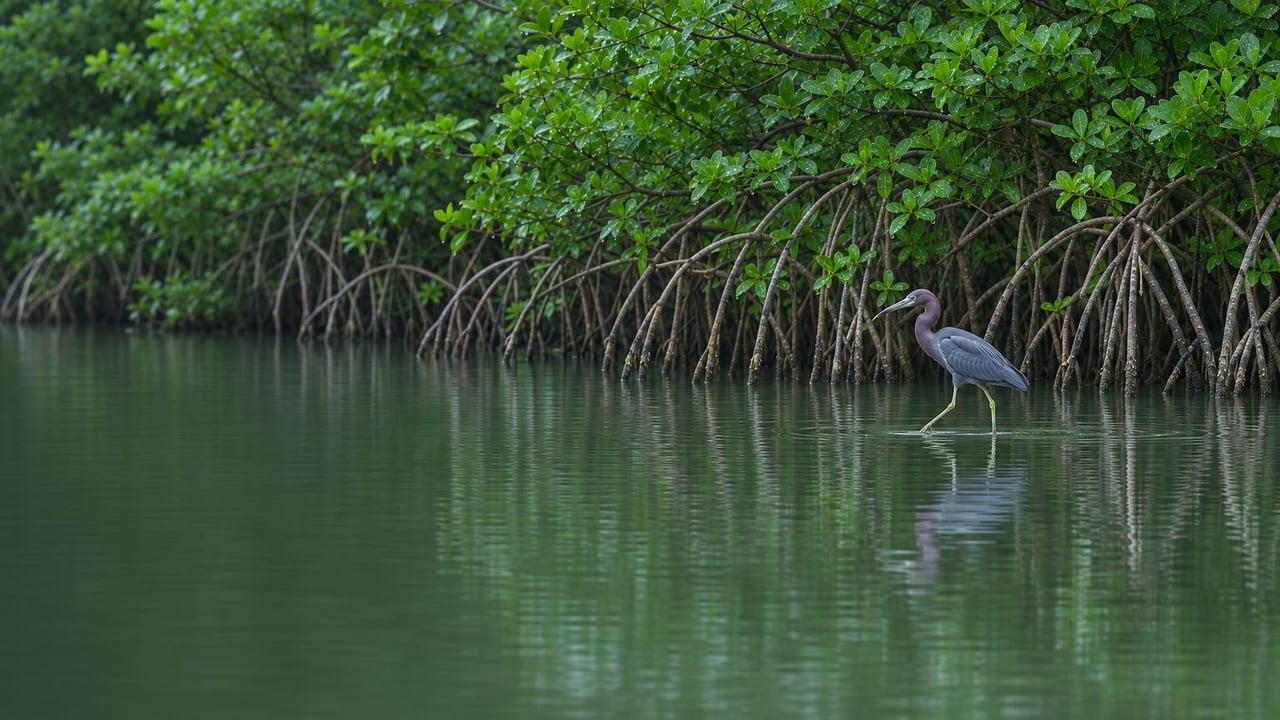
The most useful thing on the official list, for anyone who walks the edges of the estuary, is a pair of warblers. The AOCR list treats the Mangrove Yellow Warbler, Setophaga petechia, and the Northern Yellow Warbler, Setophaga aestiva, as two separate species. The mangrove species is marked as a resident and the northern species as a migrant.
So a small yellow bird in the mangroves near Avellanas this week could be a year-round neighbor or a visitor that bred far to the north. A Northern Yellow Warbler was logged at the Playa Avellanas hotspot on November 19. The Valled Tours guide puts the northern bird in the area from the second week of September to the end of April. In May, the yellow warbler still singing in the mangrove belongs to the resident species.
What the Season Looks Like, Bird by Bird
Here is how the species logged around Pinilla and Avellanas in mid-November 2026 sort out on the AOCR list.
- Northern migrants: Lesser Scaup, Hudsonian Whimbrel, Spotted Sandpiper, Willet, Least Sandpiper, Northern Yellow Warbler, Royal Tern
- Year-round residents: White Ibis, Double-striped Thick-knee, Mangrove Yellow Warbler
- Both: Yellow-crowned Night Heron
The migrants on this list are here roughly from now until April. The Valled Tours guide says winter visitors are generally present from about September or October through March or April. The residents you can count on in any month.
The Golf Course in the Middle of It
Hacienda Pinilla's golf course has the Audubon Cooperative Sanctuary designation. The course's own page credits the designation to how it preserves the area's ecological balance. On October 22, 2026, Pinilla published two news posts about the program. They describe its six categories: environmental planning, wildlife and habitat, outreach and education, chemical-use reduction and safety, water conservation, and water quality management. Audubon International says certification requires an on-site visit and must be renewed every three years. So the designation needs regular renewal.
For golfers this season, the Lesser Scaup and the Double-striped Thick-knees from the November 19 checklist are the kind of company to look for on an early tee time. Hacienda Pinilla's golf page lists posted rates of $160 for eighteen holes and $85 for nine, with tee times bookable online, by phone or by email.
Walking the Estuary With a Guide
If you would like a guide to sort sandpipers from residents, Oropopo Experience runs a private 2.5-hour wildlife walk at Playa Avellanas. It is listed on Marriott's activities site. The route goes through mangrove, estuary, river-mouth and intertidal habitat. The walk includes a biologist or naturalist guide, spotting equipment, a beach and trail cleanup, and a $2-per-person donation to a mangrove conservation program. Oropopo is an independent operator, not a Hacienda Pinilla program. These are the same habitats where the Whimbrel, Willet and Mangrove Yellow Warbler turn up.
Counting Them in December
The National Audubon Society's Christmas Bird Count runs each year from December 14 to January 5. Volunteers find a count circle and register through Audubon's Circle Finder. Audubon's 126th count summary lists three Guanacaste circles: Santa Rosa and Cacao in the Área de Conservación Guanacaste, and Palo Verde National Park.
Last season, the Área de Conservación Guanacaste held its Santa Rosa count on December 28, 2025 and its Cacao count on December 30, 2025. The Santa Rosa sector includes dry forest, mangroves and coastline. The volunteer call for that count was posted in late November with a December 15 registration deadline. If this season runs on a similar schedule, the ACG news page is where to watch.
Closer to home, the eBird lists for the Pinilla and Avellanas hotspots show each species with the date it was last logged, so you can follow the arrivals week by week through April.
If you are spending the season at Hacienda Pinilla and want help with your home while you're here or away, or an introduction to the people who know this coast best, the team at Flamingo Beach Realty would be glad to hear from you. Contact Us.